
Blog
How Pure Cold Pressed Mustard Oil is Made — From Seed to Bottle

Introduction
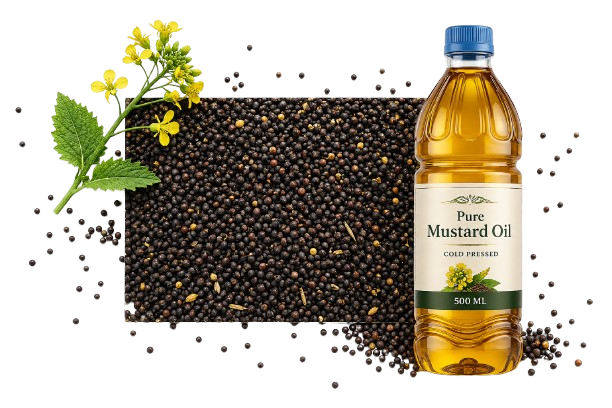
When purchasing mustard oil, most people only ever see the finished bottle on the store shelf. Very few get the chance to see what happens behind the scenes before that bottle reaches their kitchen.
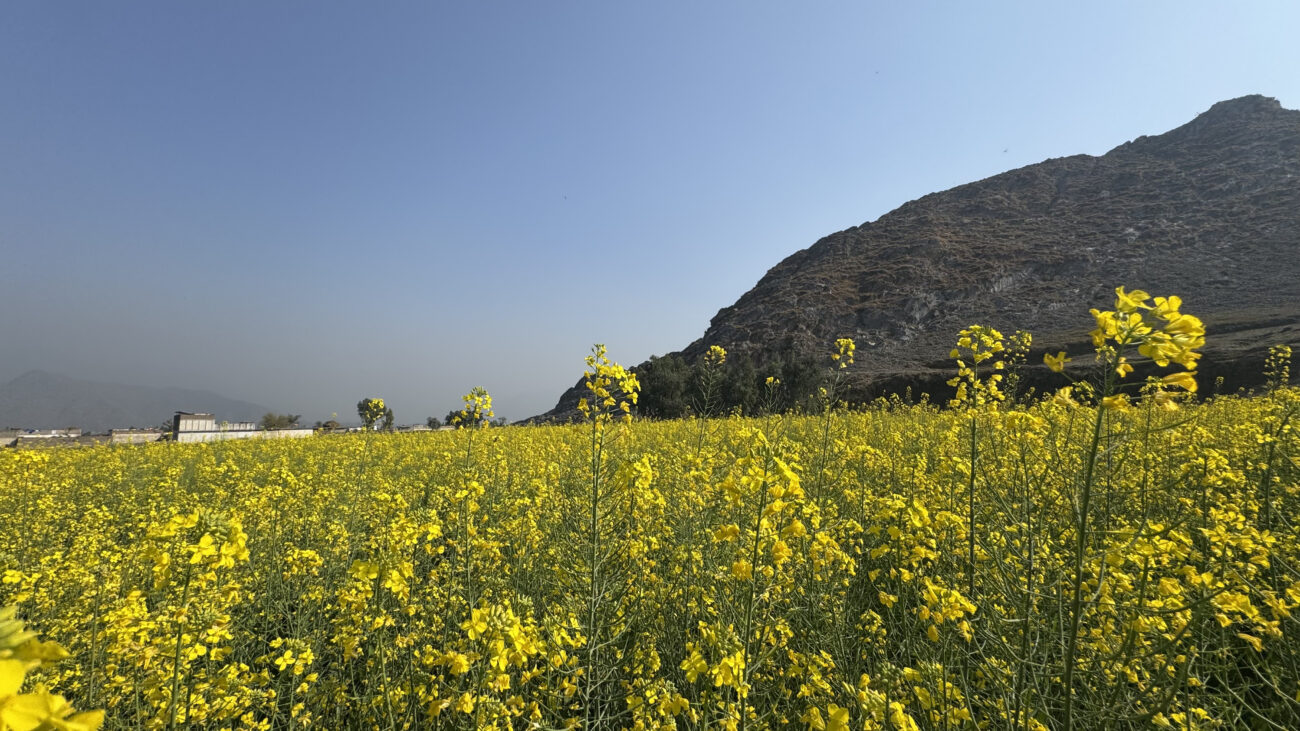
At Edible Oil Hub, we believe transparency builds trust. That’s why we’re taking you through every stage of our production process — from selecting premium mustard seeds grown in the fertile fields of Khyber Pakhtunkhwa (KPK) to carefully bottling fresh, cold-pressed mustard oil.
Unlike many commercial oils that go through intensive refining, bleaching, deodorizing, and chemical processing, our production focuses on preserving the natural qualities of mustard seeds through the traditional Kacchi Ghani cold-pressing method.
The result is a mustard oil that keeps its distinctive golden color, rich aroma, natural pungency, and authentic taste that Pakistani families have trusted for generations.
Whether you use mustard oil for cooking, pickles, traditional recipes, or everyday kitchen use, understanding how it’s made helps you appreciate the quality inside every bottle.
Read more: Why KPK Mustard Oil is Famous in Pakistan
Step 1 — Selecting Premium Mustard Seeds
Before a single drop of oil is produced, everything starts with selecting the right mustard seeds. High-quality oil can only come from high-quality raw material.
Our procurement team carefully evaluates every batch against several quality standards:
- Uniform seed size
- Rich natural color
- Proper maturity
- Low moisture content
- Free from dust
- No stones
- No damaged seeds
- No insects
- No foreign material
Most of our premium mustard seeds come from the agricultural regions of Mardan and Swabi — areas well known across Pakistan for producing excellent mustard crops thanks to their fertile soil and favorable climate.
Poor-quality seeds can reduce oil yield and affect taste, aroma, and shelf life, which is why inspection begins long before production ever starts.
Step 2 — Cleaning and Sorting
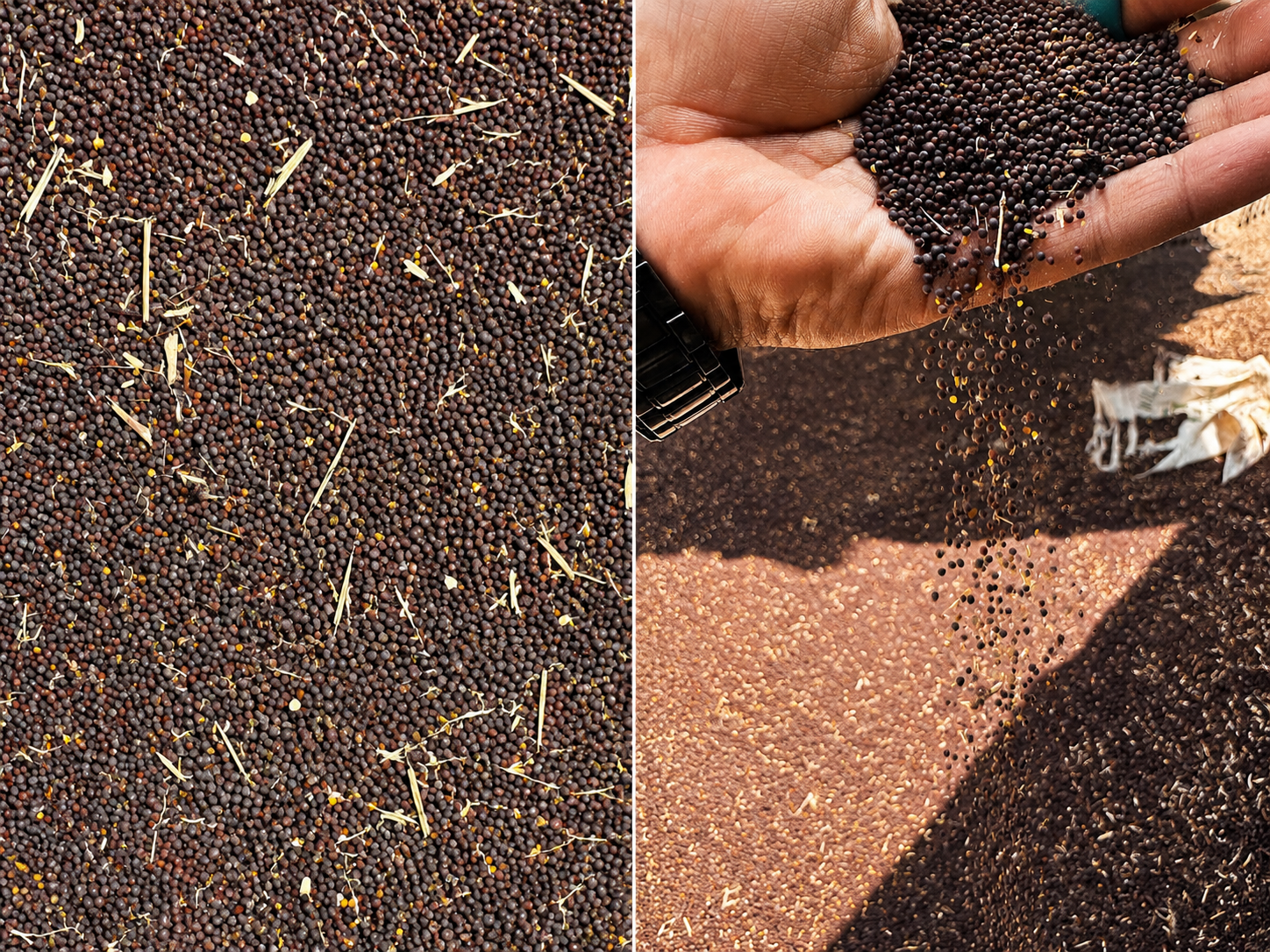
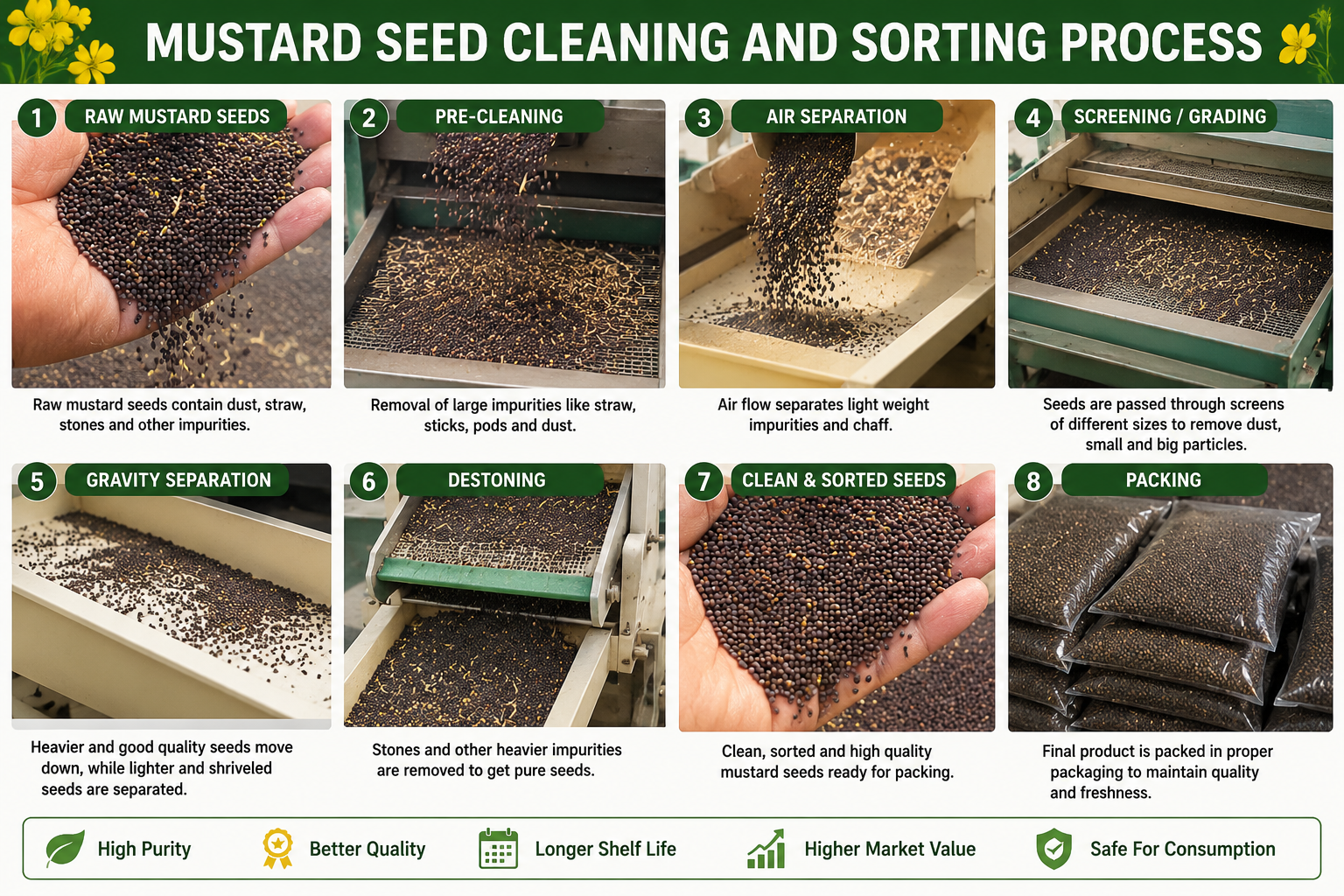
Even carefully harvested mustard seeds naturally contain small impurities. Before pressing, every batch passes through a cleaning process to remove:
- Dust
- Sand
- Small stones
- Plant residues
- Broken seeds
- Foreign particles
Modern mechanical sieves and air blowers separate unwanted material while preserving the healthy seeds.
This stage matters because impurities can:
- Reduce oil quality
- Damage machinery
- Affect taste
- Shorten storage life
Only premium seeds move forward to the pressing stage after cleaning is complete.
Step 3 — Cold Pressing Using the Traditional Kacchi Ghani Method
This is the heart of our production process. Cold pressing is what sets our mustard oil apart from ordinary refined oils.
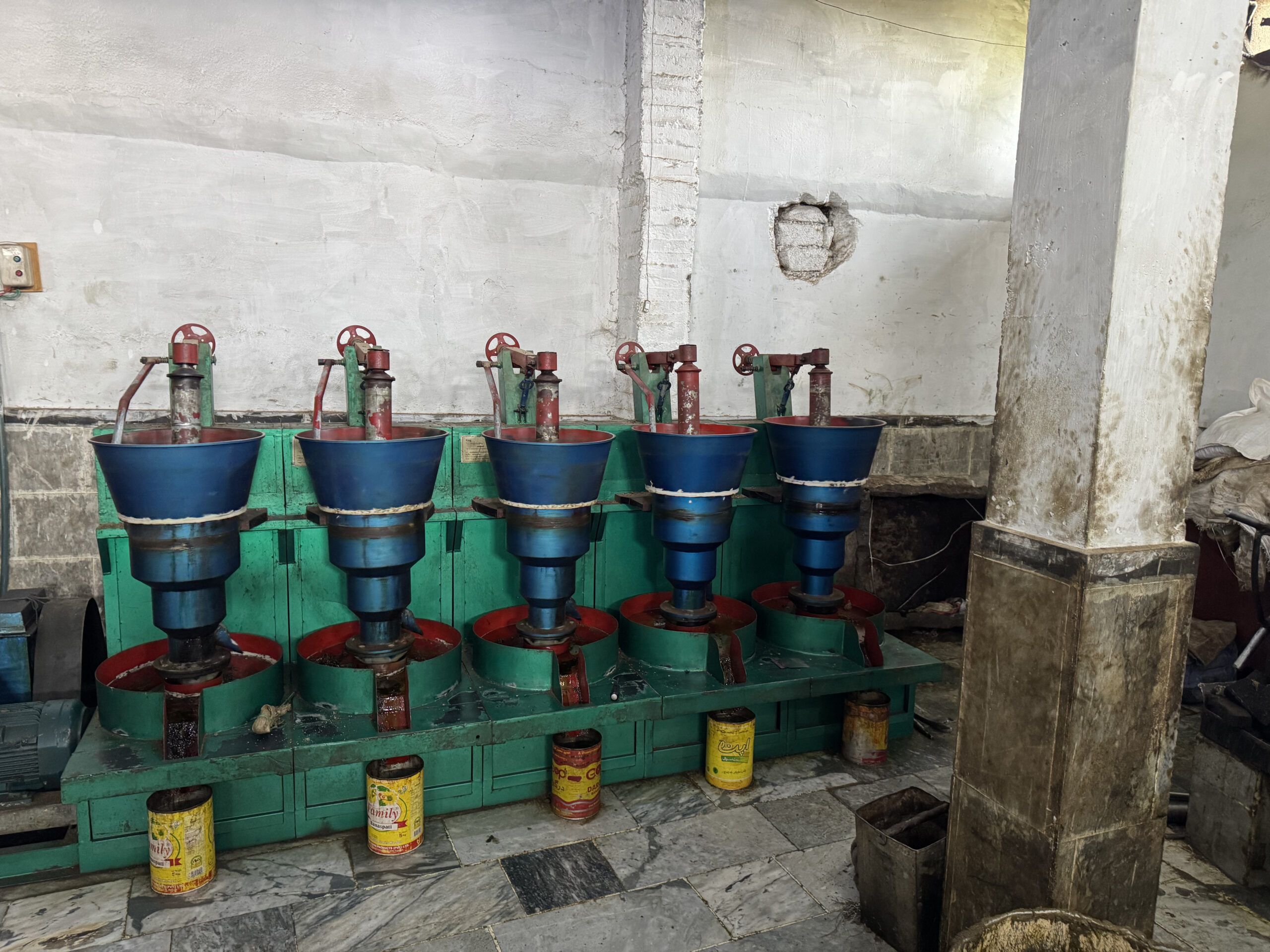
Instead of exposing the seeds to very high temperatures or chemical solvents, they’re slowly crushed under controlled temperature using a cold press expeller. The pressure naturally releases oil from inside the seed while preserving much of its original character.
During this process:
- No chemical solvents are used
- No bleaching agents are added
- No artificial color is introduced
- No deodorizing chemicals are used
- The oil retains its natural aroma
- The natural golden color remains intact
- Traditional pungency is preserved
Because excessive heat is avoided, the oil keeps the authentic flavor Pakistani households recognize.
Traditional Meets Modern
While traditional wooden “Kohlu” systems were used for generations, our modern cold press machinery follows the same principle while offering:
- Better hygiene
- Greater efficiency
- Consistent quality
- Improved food safety
The philosophy remains unchanged: gentle extraction instead of aggressive processing.
Why Cold Pressing Matters
Cold pressing preserves what nature originally placed inside the mustard seed — meaning:
- Authentic taste
- Rich aroma
- A traditional cooking experience
- Better texture
- Natural appearance
This is why many households prefer Kacchi Ghani mustard oil for:
- Traditional cooking
- Pickles (achar)
- Fish recipes
- Meat marinades
- Vegetable dishes
- Seasonal achar preparation
Step 4 — Natural Filtering and Settling
Freshly extracted mustard oil contains tiny natural particles from the seeds — this is completely normal. Rather than aggressively refining the oil, we let it settle naturally before filtration.
During this process:
- Natural sediment gradually settles
- Larger particles separate out
- The oil becomes clearer
- Its natural characteristics remain intact
The oil then passes through food-grade filters to remove any remaining fine particles without affecting its natural properties.
Unlike heavily refined oils that become crystal clear through multiple industrial processes, genuine cold-pressed mustard oil may occasionally show a slight natural sediment over time. This is a normal characteristic of traditionally produced oil, not a defect.
Step 5 — Quality Testing
Every production batch undergoes careful inspection before approval. Our quality checks include:
- Color consistency
- Natural aroma
- Characteristic pungency
- Clarity
- Cleanliness
- Packaging inspection
Where applicable, batches may also undergo laboratory testing to confirm compliance with food safety standards. Only batches that meet our quality requirements move forward to packaging, so every customer receives the same dependable quality.
Step 6 — Hygienic Bottling and Packaging
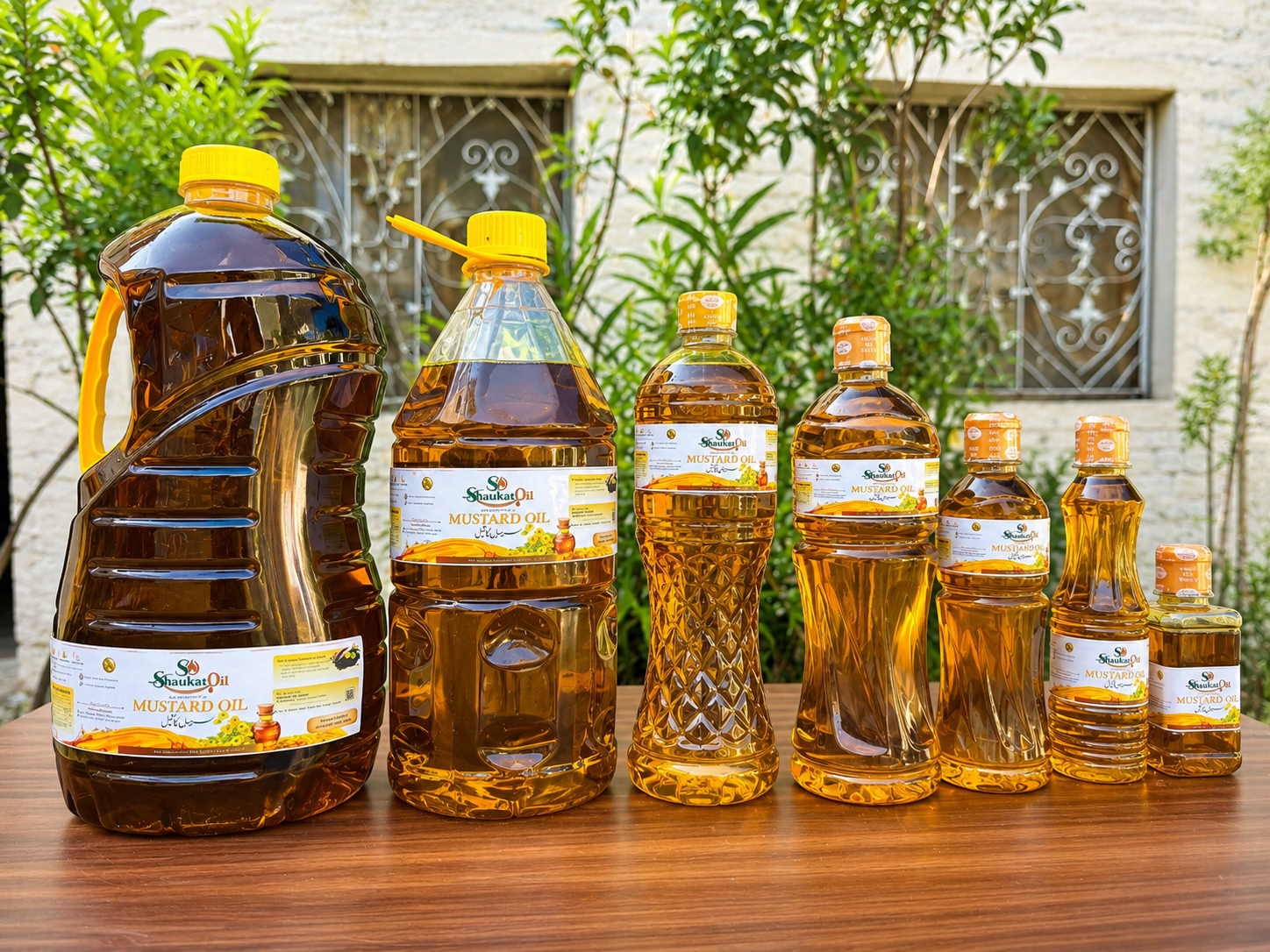
Once quality approval is complete, the oil moves to the bottling section, where clean, food-grade containers are filled under hygienic conditions.
Our available packaging sizes include:
- 200 ml
- 500 ml
- 1 Liter
- 2 Liter
- 3 Liter
- 5 Liter
- 10 Liter
- 20 Liter
- 30 Liter Tapka Can
Every bottle is properly sealed and labeled before dispatch. Our labels feature both English and Urdu branding, making it easy for customers to identify authentic products.
Proper packaging protects the oil during transportation while preserving its freshness until it reaches your kitchen.
Cold Pressed vs Refined Mustard Oil — What’s the Difference?
| Cold Pressed (Kacchi Ghani) | Refined Oil |
|---|---|
| No chemical solvents | Solvent extraction commonly used |
| Low-temperature extraction | High-heat processing |
| Natural aroma retained | Aroma largely removed |
| Traditional pungency | Mild taste |
| Natural golden color | Lighter, processed appearance |
| Minimal processing | Multiple refining stages |
| Slight natural sediment possible | Highly filtered and very clear |
| Traditional production | Industrial processing |
Why This Process Matters for Your Kitchen
The production process directly shapes how mustard oil performs in everyday cooking. Traditional cold-pressed mustard oil is valued for its rich flavor and authentic aroma, making it especially suited to:
- Traditional Pakistani dishes
- Achar (pickles)
- Vegetable cooking
- Fish recipes
- Meat marinades
- Tarka
- Paratha preparation
- Seasonal cooking
Because the oil retains its characteristic pungency and flavor, even a small quantity adds real depth to a recipe.
At Edible Oil Hub, this traditional approach has remained at the heart of our production since 1985, combining decades of experience with modern hygiene standards. Every bottle reflects our commitment to quality — from the fields where the seeds are grown to the finished product delivered to your home.
Frequently Asked Questions
Is cold-pressed mustard oil the same as Kacchi Ghani oil?
Yes. Kacchi Ghani refers to the traditional cold-pressing method where mustard seeds are crushed without high-temperature refining.
Does cold-pressed mustard oil contain chemicals?
No. Properly made cold-pressed mustard oil is extracted mechanically, without any chemical solvents used during extraction.
Why does mustard oil sometimes contain slight sediment?
Natural sediment can occur because the oil goes through minimal processing. This is normal for traditional cold-pressed oils.
Why is cold-pressed mustard oil darker?
The natural pigments from mustard seeds largely remain intact because the oil isn’t heavily refined or bleached.
How should mustard oil be stored?
Store it in a cool, dry place away from direct sunlight, with the bottle tightly sealed after each use.
Conclusion
Understanding how mustard oil is made helps you make informed choices about what you bring into your kitchen. From carefully selecting premium mustard seeds grown in KPK, to cold pressing, natural filtration, quality inspection, and hygienic packaging — every stage contributes to the authenticity of the final product.
Rather than relying on extensive industrial refining, our focus stays on preserving the natural qualities of mustard seeds through the traditional Kacchi Ghani process.
When you choose cold-pressed mustard oil, you’re choosing a production method rooted in quality, transparency, and tradition.
Experience the Difference
Now you’ve seen exactly how our mustard oil is made — from seed to bottle. Explore our collection of premium cold-pressed mustard oil and experience the authentic taste of traditionally produced Kacchi Ghani oil.